

Introduction
A structural audit of existing buildings is a critical evaluation conducted by structural engineers to assess the integrity, safety, and stability of buildings over time. This process is essential for identifying structural deficiencies, ensuring compliance with safety standards, and recommending necessary repairs or retrofitting measures. This article explores the importance, process, and final outcomes of conducting a structural audit for existing buildings.

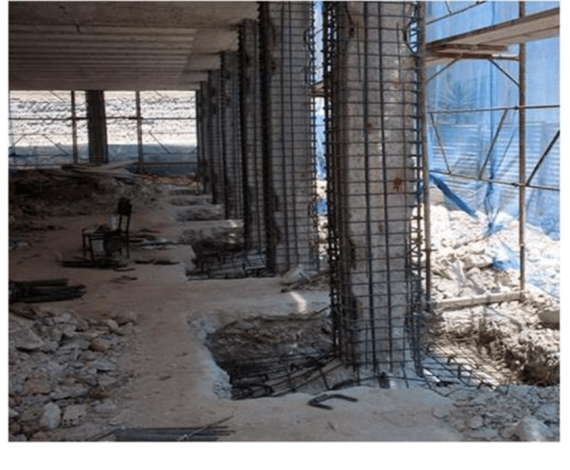
Importance of Structural Audit
A structural audit for existing buildings holds significant importance in ensuring safety, compliance, and longevity of structures. This comprehensive evaluation by structural engineers involves meticulous assessment of building components and systems to identify potential weaknesses, assess structural integrity, and recommend necessary remedial actions. Below are detailed points highlighting the importance of conducting a structural audit:
- Safety Assurance and Risk Mitigation:
- Identification of Structural Deficiencies: Through visual inspections and non-destructive testing (NDT) techniques, structural audits uncover defects such as cracks, deformations, corrosion, and inadequate load-bearing capacities.
- Risk Assessment: Engineers evaluate risks associated with structural integrity, identifying potential hazards that could compromise building safety or lead to structural failure.
- Preventive Measures: By identifying and addressing vulnerabilities early, audits help mitigate risks of accidents, collapses, or damage to property and human lives.
- Compliance with Regulatory Standards:
- Legal Requirements: Many jurisdictions mandate periodic structural audits for buildings to comply with local building codes, safety regulations, and insurance requirements.
- Due Diligence: Property owners fulfill their legal obligations by conducting audits, demonstrating proactive efforts to ensure buildings meet safety standards and mitigate liability risks.
- Financial Planning and Asset Management:
- Maintenance Planning: Audits provide critical insights into the condition of structural elements, guiding informed decisions on prioritizing repairs and allocating maintenance budgets effectively.
- Asset Protection: Regular audits help preserve property value by addressing structural issues promptly, prolonging the building’s lifespan, and minimizing the need for costly emergency repairs.
- Enhanced Building Performance and Longevity:
- Optimized Structural Performance: Assessing load-bearing capacities and structural adequacy ensures buildings can withstand intended loads and environmental conditions effectively.
- Sustainability: By maintaining structural integrity over time, audits contribute to sustainable building management, reducing resource consumption and environmental impact associated with premature building failures or renovations.
- Occupant Safety and Comfort:
- Ensuring Occupant Well-being: A structurally sound building provides occupants with a safe and comfortable environment free from risks associated with structural instability or hazards.
- Public Confidence: Building users, tenants, and stakeholders gain confidence in the safety and reliability of the structure, enhancing overall satisfaction and reputation of the property.
- Risk Management and Insurance Purposes:
- Risk Mitigation Strategies: Implementing audit recommendations helps mitigate risks associated with structural failures, reducing potential insurance claims and liability exposures.
- Insurance Premiums: Maintaining a well-documented structural audit report can potentially lead to lower insurance premiums, reflecting reduced risks and enhanced safety measures.
- Legal and Financial Due Diligence:
- Transaction Readiness: Before property transactions or transfers, structural audits provide critical information on the building’s condition, informing negotiations and ensuring transparency between buyers and sellers.
- Litigation Support: In legal disputes or claims related to building safety or structural integrity, audit reports serve as essential documentation to support litigation defense or settlement negotiations.
Process of Structural Audit
A structural audit for existing buildings involves a systematic and thorough evaluation conducted by qualified structural engineers. This process aims to assess the condition, safety, and integrity of building structures, identifying any deficiencies or potential risks that may compromise structural performance. Below is a detailed outline of the typical process involved in conducting a structural audit:
- Preliminary Assessment and Documentation Review
- Review of Building Plans and Documentation: Structural engineers begin by reviewing original construction drawings, as-built plans, and any relevant documentation. This helps establish the building’s design specifications, structural elements, and intended load capacities.
- Historical Data Collection: Gathering historical data such as previous inspection reports, maintenance records, and renovation documentation provides insights into past structural issues, repairs, and modifications that may affect current conditions.
- Visual Inspection and Non-Destructive Testing (NDT)
- Comprehensive Visual Inspection: Engineers conduct a detailed visual inspection of the building’s exterior and interior, examining structural components such as beams, columns, slabs, foundations, and walls. They look for visible signs of distress such as cracks, deformations, settlements, water stains, corrosion, or deterioration.
- Non-Destructive Testing (NDT):
. Non-Destructive Testing (NDT) techniques are crucial tools used by structural engineers to assess the condition, integrity, and performance of reinforced concrete (RCC) members and structural steel components without causing damage to the materials. These methods help identify defects, deterioration, and potential weaknesses, guiding maintenance, repair, and retrofitting strategies. Here’s a detailed exploration of NDT techniques commonly employed for RCC members and structural steel:
Non-Destructive Testing (NDT) Techniques
1. Reinforced Concrete (RCC) Members
Rebound Hammer Test (Schmidt Hammer):
- Overview: Schmidt hammer measures surface hardness to estimate concrete strength and assess uniformity.
- Methodology: The rebound value correlates with concrete compressive strength. Multiple tests are conducted at different locations to assess concrete quality and identify areas of potential degradation.
Half-Cell Potential Test (Electrochemical Method):
- Overview: This test evaluates the corrosion susceptibility of reinforcement bars (rebars) embedded in concrete.
- Methodology: A reference electrode is placed on the concrete surface, and a potential difference (half-cell potential) between the reinforcement and electrode is measured. Deviations from standard values indicate the likelihood of corrosion, guiding preventive measures.
Ultrasonic Pulse Velocity Testing:
Overview: The Ultrasonic Pulse Velocity (UPV) test is a non-destructive technique used to assess the quality and integrity of concrete structures. It measures the speed of ultrasonic pulses as they travel through concrete, providing insights into material homogeneity, density, and the presence of defects such as cracks or voids. UPV testing is essential for quality control in construction, evaluating structural conditions, and guiding maintenance strategies to ensure long-term durability and safety of concrete infrastructure.
Methodology:
- Transducer Setup: Transducers are placed on the concrete surface at specified locations. One transducer sends ultrasonic pulses while another receives them.
- Wave Propagation: Ultrasonic waves travel through the concrete, reflecting off internal boundaries and defects such as cracks or interfaces between different materials.
- Measurement: The time taken for pulses to travel between transducers is recorded. Pulse velocity (V) is calculated using the formula V=DTV = \frac{D}{T}V=TD, where DDD is the distance between transducers and TTT is the time of travel.
- Analysis: Results are compared with established standards or baseline values. Higher velocities indicate denser, more homogeneous concrete, while lower velocities may suggest the presence of defects or deterioration.
- Interpretation: UPV test results provide quantitative data on concrete quality and the presence of defects, guiding decisions on maintenance, repair, and rehabilitation strategies to optimize structural performance and longevity.
Impact-Echo Testing:
- Overview: Impact-echo assesses the condition of concrete by analysing the acoustic response generated from impacting the surface with a mechanical or acoustic source.
- Methodology: The frequency and timing of acoustic echoes provide insights into concrete thickness, detecting voids, and determining the presence of delamination’s or cracks.
2. Structural Steel Components
Ultrasonic Testing (UT):
- Overview: UT assesses the thickness of structural steel members, detects flaws such as cracks, laminations, or inclusions, and evaluates weld integrity.
- Methodology: High-frequency sound waves are transmitted through steel components. The reflected waves provide information about internal discontinuities and material thickness.
Magnetic Particle Testing (MT):
- Overview: MT detects surface and near-surface flaws in ferromagnetic materials such as structural steel.
- Methodology: Magnetic particles are applied to the steel surface. Flaws disrupt the magnetic field, causing particles to gather at defect locations. Inspection under suitable lighting reveals indications of cracks, laps, or seams.
Dye Penetrant Testing (PT):
- Overview: PT identifies surface-breaking defects in structural steel, including cracks, laps, porosity, or leaks.
- Methodology: A penetrant dye is applied to the surface, penetrates into defects through capillary action, and excess dye is removed. A developer reveals indications of defects visible under suitable lighting conditions.
Radiographic Testing (RT):
- Overview: RT examines the internal structure of thick steel sections and welds, detecting internal defects such as voids, inclusions, or lack of fusion.
- Methodology: X-rays or gamma rays are directed through the steel. Film or digital detectors record variations in radiation intensity, highlighting internal discontinuities.
Conclusion
Non-Destructive Testing (NDT) techniques for RCC members and structural steel components provide critical insights into the condition, integrity, and performance of building materials without causing damage. By employing these methods, structural engineers can accurately assess defects, deterioration, and potential weaknesses, guiding informed decisions on maintenance, repair, and retrofitting strategies. The application of NDT ensures structural safety, prolongs asset lifespan, and supports sustainable building management practices in both reinforced concrete and structural steel constructions.
- Structural Analysis and Evaluation
- Load Testing and Structural Modeling: Engineers may perform load tests to simulate real-world conditions and assess the building’s response to applied loads. This helps determine load-bearing capacities, structural behavior, and potential weaknesses under different scenarios.
- Computational Analysis: Using advanced structural analysis software, engineers model and analyze the building’s structural components. They evaluate load distributions, stress concentrations, and the effects of aging, environmental factors, and operational loads on structural performance.
- Condition Assessment and Defect Identification
- Data Compilation and Assessment: Engineers compile inspection findings, NDT results, and analytical data into a comprehensive assessment report. They categorize identified defects based on severity, prioritizing critical issues that require immediate attention.
- Defect Identification: Documenting and analyzing structural deficiencies, including cracks, corrosion, inadequate reinforcement, foundation settlements, or structural instability. Each identified defect is assessed for its potential impact on building safety and performance.
- Recommendations and Repair Strategies
- Detailed Report Preparation: Engineers prepare a detailed audit report summarizing assessment findings, including visual observations, NDT results, structural analyses, and defect assessments. The report provides a clear overview of the building’s current condition and safety status.
- Repair and Retrofit Recommendations: Based on assessment findings, engineers propose specific repair or retrofitting strategies to address identified deficiencies. Recommendations may include:
- Structural repairs such as crack injections, concrete patching, or reinforcement repairs.
- Retrofit measures to enhance structural strength, stability, and resilience against seismic activity or other hazards.
- Maintenance measures to prevent future deterioration and extend the building’s lifespan.
- Implementation and Follow-up
- Execution of Recommendations: Property owners or facility managers implement recommended repair and maintenance measures as outlined in the audit report. Contractors and specialists may be engaged to carry out structural repairs or retrofitting work under the supervision of structural engineers.
- Monitoring and Maintenance Planning: Engineers establish a monitoring plan to track the effectiveness of implemented measures and ensure ongoing structural integrity. They may recommend periodic inspections, monitoring of structural conditions, and preventive maintenance to mitigate future risks.
Conclusion
The process of conducting a structural audit for existing buildings is a comprehensive and methodical approach to assessing and enhancing structural safety and integrity. By combining visual inspections, advanced NDT techniques, structural analysis, and detailed reporting, engineers provide property owners with valuable insights into the condition of their buildings. The outcomes of a structural audit support informed decision-making, proactive maintenance planning, and compliance with safety standards, ultimately safeguarding occupants and protecting investments in the built environment.
Final Outcomes and Recommendations
- Detailed Report and Findings
- Assessment Summary: Summarizing findings from visual inspections, NDT results, and structural analyses.
- Defect Identification: Documenting structural deficiencies, prioritizing critical issues that require immediate attention.
- Recommendations for Repairs or Retrofitting
- Repair Strategies: Providing detailed repair specifications, materials recommendations, and cost estimates.
- Retrofitting Measures: Proposing retrofitting techniques to enhance structural strength, stability, and resilience against seismic events or other hazards.
- Maintenance Plan and Follow-up
- Long-Term Maintenance Schedule: Developing a maintenance plan with periodic inspections and monitoring to ensure ongoing structural integrity.
- Monitoring and Compliance: Monitoring the implementation of recommendations, ensuring compliance with safety standards and regulatory requirements over time.
Conclusion
A structural audit of existing buildings is a proactive approach to maintaining safety, compliance, and asset longevity. By conducting thorough assessments, employing advanced testing techniques, and providing comprehensive recommendations, structural engineers play a crucial role in safeguarding buildings and occupants. The outcomes of a structural audit not only enhance safety but also support informed decision-making for property owners, ensuring sustainable management of building assets. As buildings age and evolve, regular audits remain essential to mitigate risks, protect investments, and uphold structural integrity in the built environment.

Lorem ipsum dolor sit amet, consetetur sadipscing elitr, sed diam nonumy eirmod tempor invidunt ut labore et dolore magna aliquyam erat, sed diam voluptua. At vero eos et accusam et justo duo dolores et ea rebum. Stet clita kasd gubergren, no sea takimata sanctus est Lorem ipsum dolor sit amet. Lorem ipsum dolor sit amet, consetetur sadipscing elitr, sed diam nonumy eirmod tempor invidunt ut labore et dolore magna aliquyam erat, sed diam voluptua. At vero eos et accusam et justo duo dolores et ea rebum. Stet clita kasd gubergren, no sea takimata sanctus est Lorem amet.Loem ipsum dolor sit amet, consetetur sadipscing elitr, sed diam nonumy eirmod tempor invidunt ut labore et dolore magna aliquyam erat, sed diam voluptua. At vero eos et accusam.
