
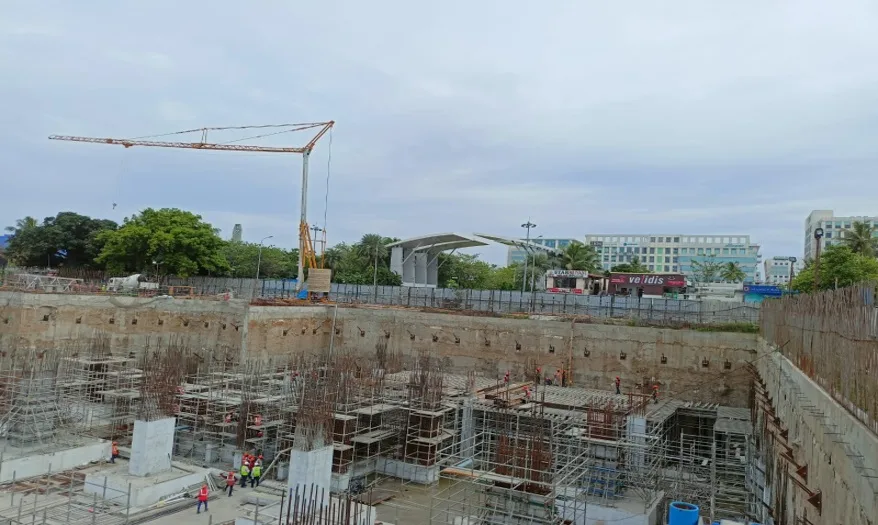
Diaphragm walls, or D-walls, are deep, reinforced concrete retaining structures extensively used in urban construction projects. They offer structural stability and help control groundwater seepage during deep excavations. Diaphragm walls are essential in constructing underground facilities like basements, tunnels, and metro stations, especially in densely populated areas where space is limited.
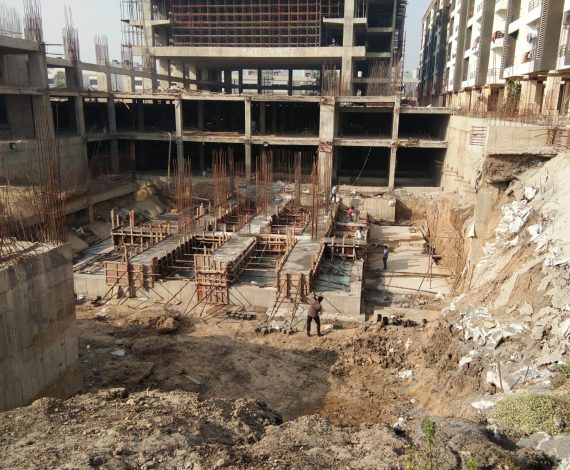
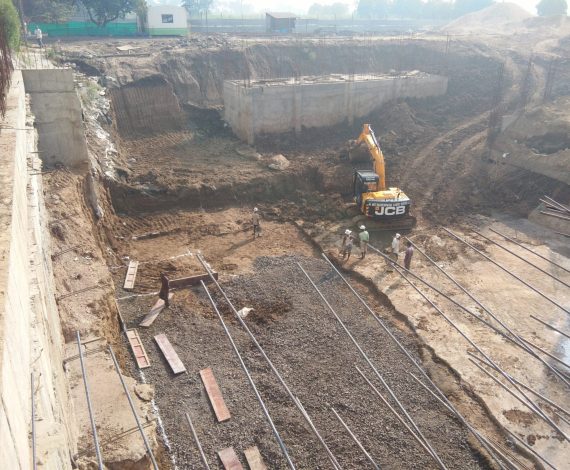
Building Below Ground: Unraveling the Power of Diaphragm Walls in Urban Construction
Overview of Diaphragm Walls
A diaphragm wall is a continuous or discontinuous vertical barrier constructed using reinforced concrete panels. The wall is created through the slurry trenching technique, which involves digging a trench filled with bentonite or polymer slurry to maintain the trench’s stability. Diaphragm walls range from 0.5 to 1.5 meters in thickness and can reach depths exceeding 60 meters, depending on the project’s needs.
Types of Diaphragm Walls
- Structural Diaphragm Walls: These walls serve as both retaining walls and load-bearing elements. They are widely used in high-rise building foundations, deep basements, and other structures requiring significant lateral and vertical support.
- Cut-off Diaphragm Walls: These walls are primarily used for groundwater control and are often implemented in dam construction, reservoir embankments, and flood prevention systems.
Detailed Construction Process
The construction of diaphragm walls involves several stages, from initial site preparation to panel installation. Here’s a detailed breakdown of each step:
- Guide Wall Construction: The first step involves building a shallow concrete guide wall, usually about 1 meter deep and 0.2 meters thick, along the alignment of the future diaphragm wall. This guide wall serves two main purposes:
- It provides a reference for the trench excavation.
- It maintains the trench’s alignment and prevents the sides from collapsing during excavation.
- Trench Excavation: The trench is excavated panel by panel using a mechanical grab, hydraulic cutter, or reverse circulation drilling rig. During excavation, a bentonite or polymer slurry is continuously pumped into the trench to stabilize the side walls and prevent soil collapse. The slurry fills the trench, creating a hydraulic barrier against groundwater.
- Reinforcement Cage Fabrication and Installation: After reaching the desired depth, a pre-fabricated steel reinforcement cage is carefully lowered into the trench. The cage is designed according to the structural requirements, including vertical and horizontal steel bars, spacers, and connectors for adjacent panels.
- Concrete Placement Using Tremie Method: Concrete is placed in the trench using the tremie method, which involves a pipe with a funnel-shaped top (tremie pipe). The pipe is lowered to the bottom of the trench, and concrete is poured from above, displacing the slurry upwards. The displaced slurry is collected, filtered, and reused in subsequent excavation panels. The tremie method ensures a uniform, void-free concrete placement even at great depths.
- Panel Construction: Diaphragm walls are constructed in segments or panels, typically ranging from 2.5 to 7 meters in length. The panels can be primary or secondary:
- Primary Panels: Constructed first, these panels serve as the main structural elements.
- Secondary Panels: These are cast later to fill gaps between primary panels, ensuring continuity.
Joints between panels are sealed with water bars or other waterproofing materials to enhance the wall’s water-tightness.
- Connection and Strutting: For large-scale projects, temporary strutting or anchors may be installed to stabilize the wall during excavation. The wall may also be integrated with foundation slabs or lateral bracing systems.
Applications of Diaphragm Walls
Diaphragm walls are utilized across various infrastructure projects, including:
- Underground Metro Stations: Providing structural support for deep underground stations.
- Basements and Underground Parking Garages: Offering lateral support for multi-story basements.
- Dams and Embankments: Acting as cut-off walls to prevent water seepage.
- Ventilation Shafts and Utility Tunnels: Supporting vertical shafts and tunnels in urban areas.
Advantages of Diaphragm Walls
- High Structural Integrity: Diaphragm walls provide robust lateral and vertical support, making them ideal for deep excavations.
- Effective Groundwater Control: The slurry trench technique ensures water-tightness, preventing groundwater ingress during excavation.
- Minimal Disruption: The construction process generates less noise and vibration compared to conventional retaining walls, making them suitable for urban settings.
Challenges and Considerations
- Complex Installation: Diaphragm walls require specialized equipment and skilled labor, increasing construction complexity.
- Soil Conditions: The effectiveness of diaphragm walls is highly dependent on soil type and groundwater conditions.
- Cost: While diaphragm walls offer significant benefits, their installation can be costly, especially for large-scale projects.
Conclusion
Diaphragm walls are indispensable in modern construction, especially in urban environments requiring deep excavations. From high-rise buildings to metro stations, they offer both structural stability and groundwater management. Understanding the detailed construction process, from guide wall setup to concrete placement, is crucial for civil engineers involved in large-scale infrastructure development. With advancements in construction technology, diaphragm walls continue to be a reliable and efficient solution for challenging underground projects.

Lorem ipsum dolor sit amet, consetetur sadipscing elitr, sed diam nonumy eirmod tempor invidunt ut labore et dolore magna aliquyam erat, sed diam voluptua. At vero eos et accusam et justo duo dolores et ea rebum. Stet clita kasd gubergren, no sea takimata sanctus est Lorem ipsum dolor sit amet. Lorem ipsum dolor sit amet, consetetur sadipscing elitr, sed diam nonumy eirmod tempor invidunt ut labore et dolore magna aliquyam erat, sed diam voluptua. At vero eos et accusam et justo duo dolores et ea rebum. Stet clita kasd gubergren, no sea takimata sanctus est Lorem amet.Loem ipsum dolor sit amet, consetetur sadipscing elitr, sed diam nonumy eirmod tempor invidunt ut labore et dolore magna aliquyam erat, sed diam voluptua. At vero eos et accusam.
